Churches
Sagrada Família, the expiatory temple Barcelona is still building
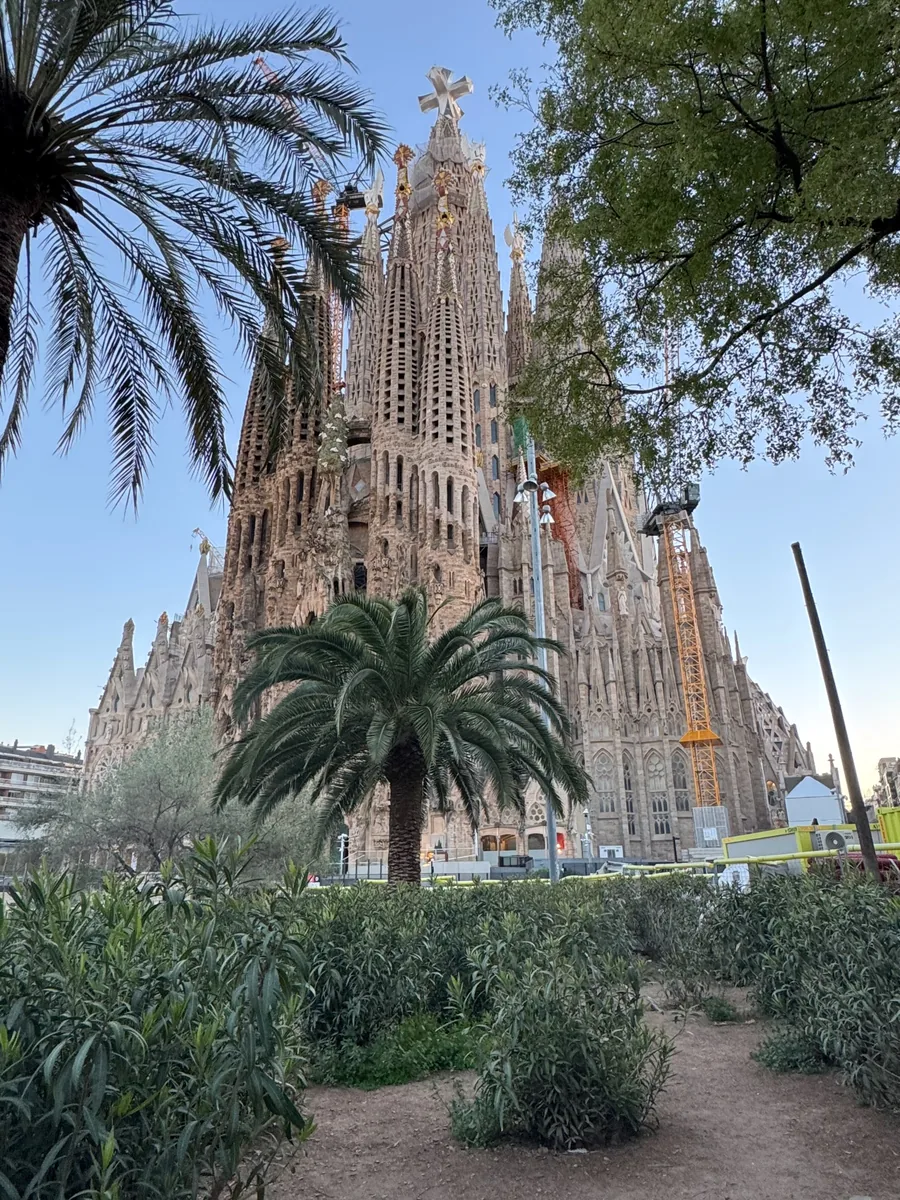
The Sagrada Família is a minor basilica in the Eixample district of Barcelona, begun on 19 March 1882 and still under construction. Antoni Gaudí directed the work from 1883 until his death in 1926, and the central Tower of Jesus Christ reached its full height of 172.5 metres in February 2026.
- Type
- Minor basilica
- Dedication
- The Holy Family
- Rite
- Roman
- Diocese
- Archdiocese of Barcelona
- Built
- from 19 March 1882, under construction
- Consecrated
- 7 November 2010
- Architects
- Francisco de Paula del Villar, Antoni Gaudí
- Website
- sagradafamilia.org/en/home
An expiatory temple
The church began with a bookseller. José María Bocabella founded the Spiritual Association of Devotees of Saint Joseph, and after a visit to the Vatican in 1872 he returned from Italy intending to build a church inspired by the basilica at Loreto. It was to be an expiatory temple, paid for entirely by donations from people who wanted to answer a growing rejection of the Church and its teaching.
Bishop Urquinaona laid the cornerstone on 19 March 1882, the feast of Saint Joseph. The diocesan architect Francisco de Paula del Villar had drawn a Gothic revival church of standard form, with pointed windows, buttresses and a pointed bell tower. Villar resigned on 18 March 1883 after disagreements over the cost of materials, and Antoni Gaudí took over the design and changed it radically. The building is still paid for the same way, through donations and ticket income, with no money from government or official church sources.
Gaudí, 1883 to 1926
Gaudí began work in November 1883 and was named Architect Director on 28 March 1884. The chapel of Saint Joseph in the crypt opened in 1885 and the first Masses were held there. Work on the Nativity façade began in 1891, and from 1914 Gaudí worked on nothing else until his death. The bell tower of Saint Barnabas, finished in 1925, was the only one he saw completed.
When Gaudí died in 1926 the church was between 15 and 25 percent complete, and he was buried in its crypt. His disciple Domènec Sugrañes took over. In July 1936, at the start of the Civil War, anarchists set fire to the crypt and broke into the workshop, burning plans and photographs and smashing the plaster models. From 1939 Francesc de Paula Quintana carried on with what could be saved from the workshop and reconstructed from published plans and photographs.
Three façades and eighteen towers
Gaudí planned three façades. The Nativity façade, built between 1893 and 1936, faces the rising sun to the northeast and carries scenes of the birth of Jesus in the naturalistic style Gaudí himself directed. The Passion façade to the west was begun in 1954 from his 1917 design, its towers were finished in 1976, and Josep Maria Subirachs began its gaunt, angular sculpture in 1987. The Glory façade to the south, the main entrance, was begun in 2002 and is incomplete, and its planned stairway over Carrer de Mallorca is disputed with the neighbours whose homes stand in its path.
The design calls for eighteen towers, twelve for the Apostles, four for the Evangelists, one for the Virgin Mary and the tallest for Jesus Christ. The tower of the Virgin Mary, 138 metres, was inaugurated on 8 December 2021, and the four towers of the Evangelists, 135 metres, on 12 November 2023. The Tower of Jesus Christ reached its full height of 172.5 metres on 20 February 2026, when the upper arm of its cross was set in place, which completed its exterior. Pope Leo XIV blessed the tower on 10 June 2026 at a Mass for the centenary of Gaudí's death, and its interior is expected to be finished in 2028.
What the building is for
The nave was roofed and an organ installed in 2010, and on 7 November 2010 Pope Benedict XVI consecrated the church and proclaimed it a minor basilica. It is often called a cathedral, but the cathedral church of the Archdiocese of Barcelona is the Cathedral of the Holy Cross and Saint Eulalia. In 2005 UNESCO had already added the Nativity façade and the crypt to its listing of the Works of Antoni Gaudí.
The Archdiocese of Barcelona holds an international Mass in the basilica every Sunday and holy day of obligation at 9 am, and an evening Mass on Saturdays at 8 pm, free of charge but limited by capacity. From 2 February 2026 the first hour of each visiting day is kept quiet for prayer. The church is dedicated to the Holy Family, whose feast falls on 27 December in 2026, and the Junta Constructora that builds and maintains it is a private pious foundation presided over by the archbishop of Barcelona. Gaudí is said to have kept the central tower lower than Montjuïc hill, holding that a work of human hands should not rise above God's, and that story is still given as the reason for its height.
Sources
- History of the Temple — Basílica de la Sagrada Família (milestones from 1882 to the Tower of Jesus Christ in 2026)
- The Foundation — Basílica de la Sagrada Família (the Junta Constructora and expiatory funding)
- Worship at the Basilica — Basílica de la Sagrada Família (Mass times)
- FAQs — Basílica de la Sagrada Família (quiet hour from 2 February 2026)
- The Holy Family of Jesus, Mary and Joseph — USCCB Daily Readings (lectionary 17)
- Sagrada Família — Wikipedia (origins, construction chronology, façades and towers)
Further reading
- The temple of the Sagrada Familia — Jordi Faulí, Aldeasa, 2006 (borrowable on the Internet Archive)
- Sagrada Família — Encyclopaedia Britannica
- Works of Antoni Gaudí — UNESCO World Heritage Centre