Churches
Church of Saint Nectarios on Aegina
The large modern Church of Saint Nectarios stands beside the Holy Trinity women's monastery near Kontos on Aegina. The church, monastery, saint's house, and burial chapel belong to one pilgrimage complex, but they are not the same building.
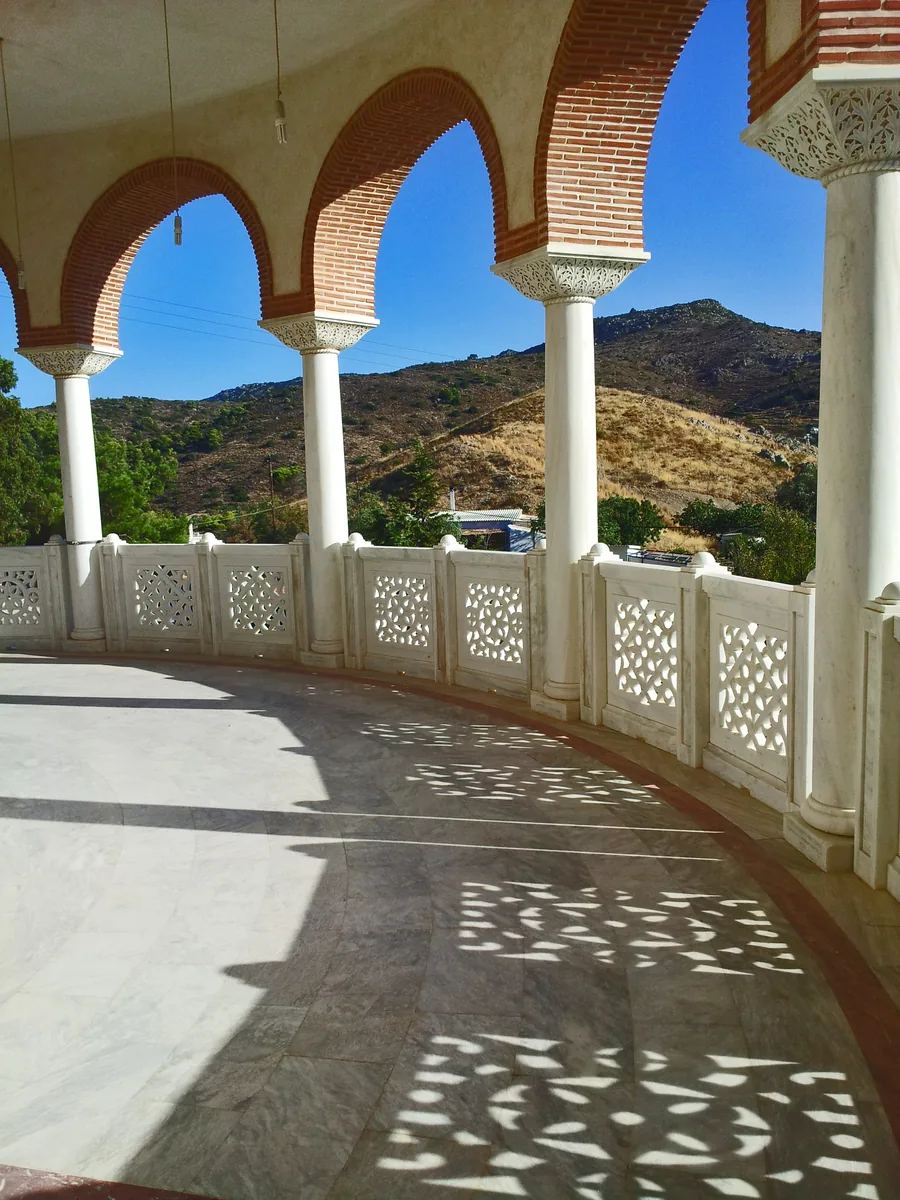
- Type
- Pilgrimage church
- Dedication
- Saint Nectarios of Aegina
- Built
- 1973–1994
- Style
- Domed basilica
One complex, several buildings
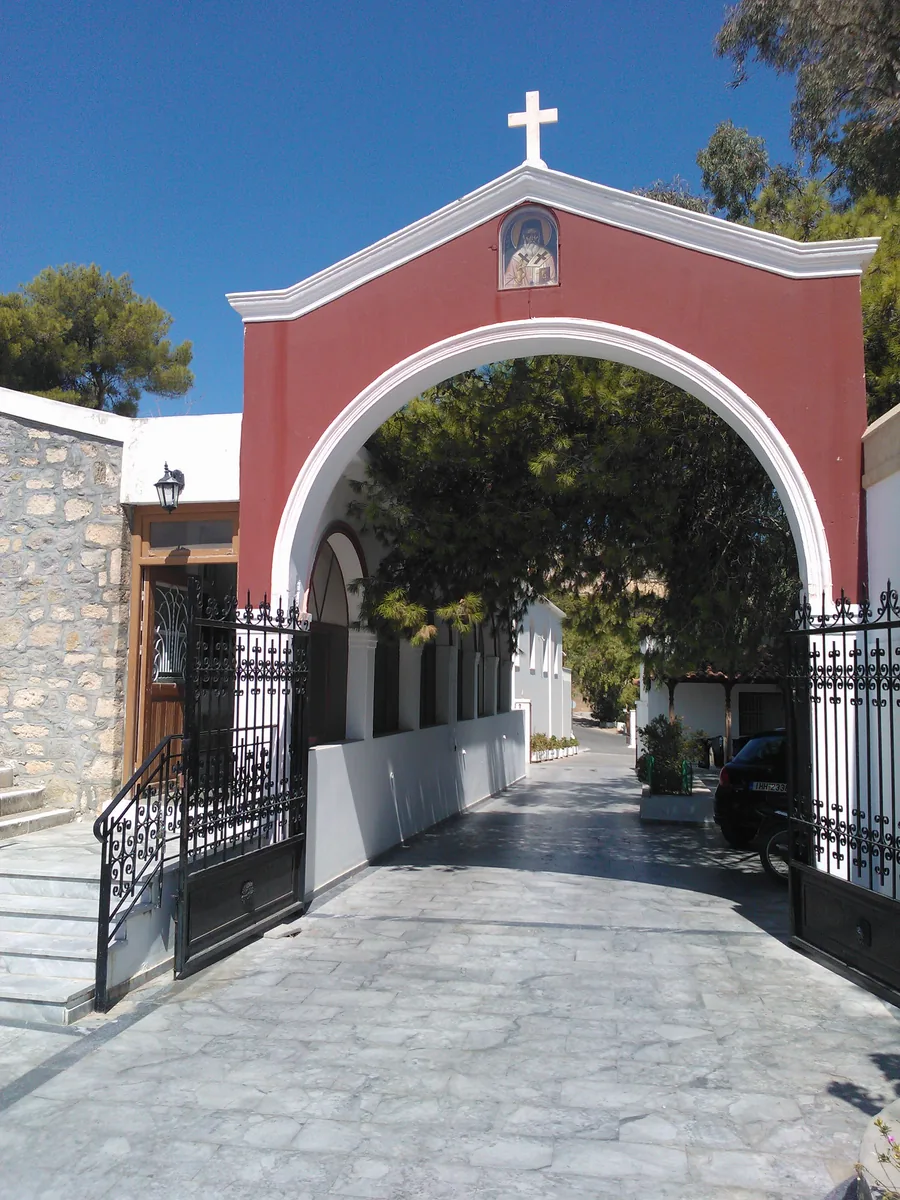
_Monastery_01.jpg)
The large church visible on approach is the modern Church of Saint Nectarios. Beside it stands the older Holy Trinity monastery, which Nectarios founded as a women's convent in 1904. The monastery's main church is dedicated to the Holy Trinity. A smaller church and the chapel containing Nectarios's grave also stand within the complex.
This explains the overlapping names. The convent is formally the Holy Trinity Monastery but is commonly called the Monastery of Saint Nectarios. The modern church bears his name directly.
How the site relates to Saint Nectarios
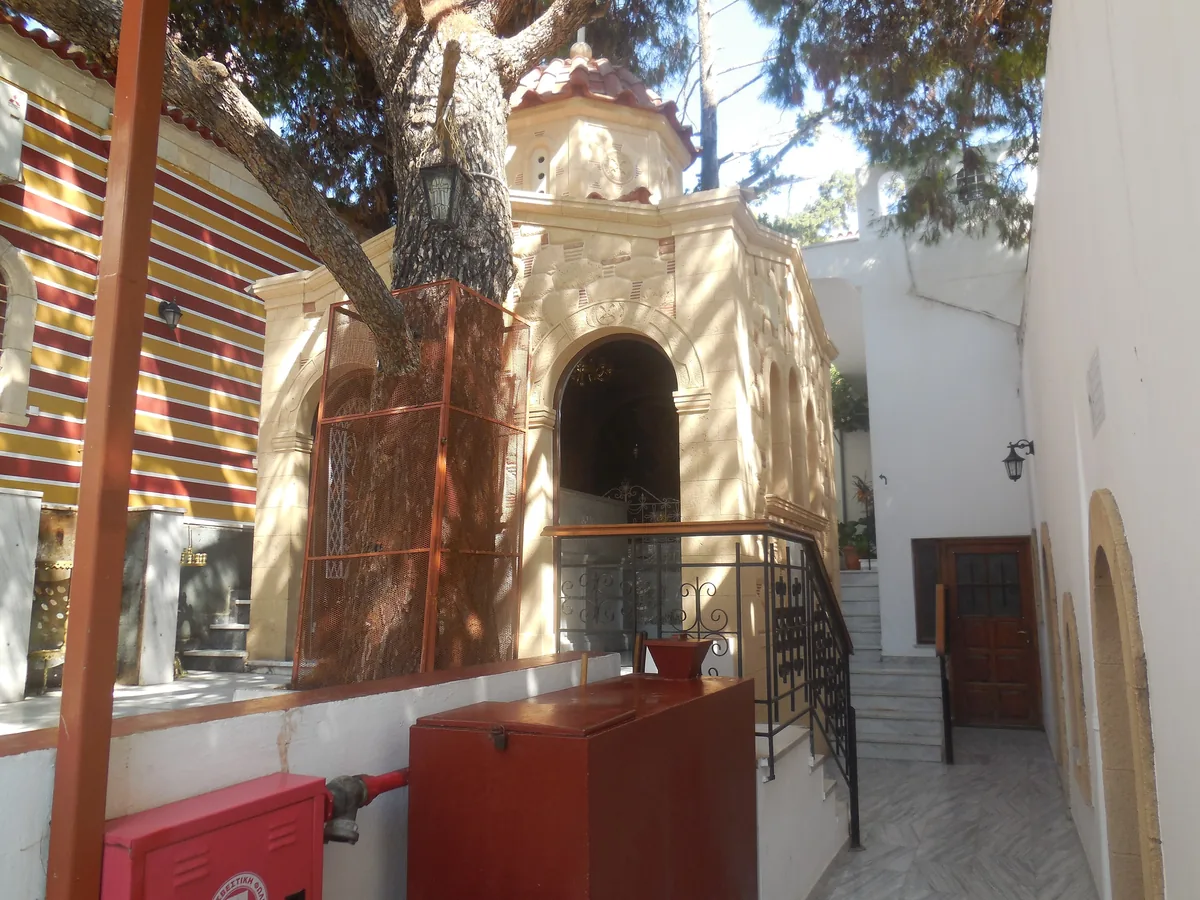

Nectarios moved to a small house outside the convent in 1908 and lived there until his death in 1920. His house remains with personal belongings inside, and his grave is held in the nearby chapel. The Ecumenical Patriarchate proclaimed him a saint in 1961, so the modern church commemorates him. The church he himself founded is the older monastery church beside it.
Sources
- Monastery of Agios Nektarios (Monastery of Agia Triada) — Religious Greece
- Bulletin for Sunday, November 9, 2025: St. Nektarios of Aegina — St. Mary's Antiochian Orthodox Church (feast-day epistle)
- Ναός Αγίου Νεκταρίου στην Αίγινα — Wikipedia (Greek; construction dates and plan)
- Άγιος Νεκτάριος Αιγίνης — Wikipedia (Greek; the 1961 proclamation)
Further reading
- Holy Trinity (Saint Nectarios) Monastery, Aegina Island — Monasteries of Greece
- St. Nectarios of Aegina (Modern Orthodox Saints, vol. 7) — Constantine Cavarnos, Institute for Byzantine and Modern Greek Studies, 1981 (borrowable on the Internet Archive)