People of the Church
Saint Nectarios of Aegina and the church that bears his name
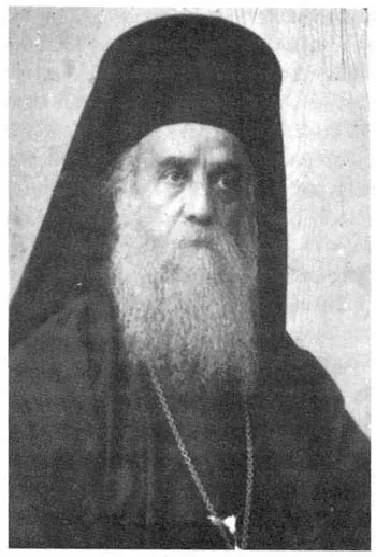
Saint Nectarios was a Greek Orthodox bishop, teacher, writer, and monastic founder. The last twelve years of his life were spent beside the women's monastery he established on Aegina, where his home and grave became a place of pilgrimage that draws believers from across Greece.
From Selyvria to Pentapolis
.JPG)
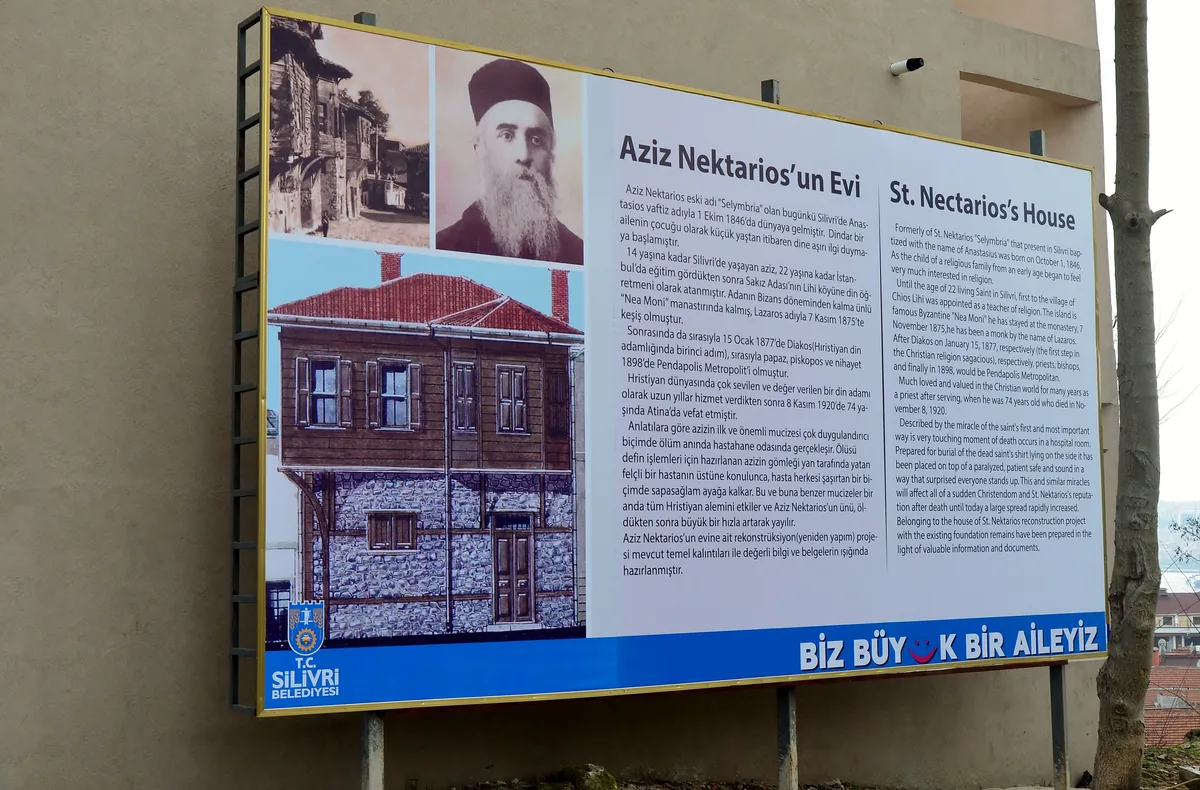
He was born Anastasios Kephalas on October 1, 1846, in Selyvria, a town in Eastern Thrace that is now Silivri, Turkey. He worked and studied in Constantinople and became a monk on Chios, at the Nea Moni monastery, in 1876. When he was ordained a deacon in 1877, he received the name Nectarios.
After studying theology in Athens, Nectarios went to the Greek Orthodox Patriarchate of Alexandria. He was ordained a priest in Alexandria in March 1886 and consecrated Metropolitan of Pentapolis in Cairo in January 1889. Pentapolis was an old diocese in what is now eastern Libya. The title says nothing about Aegina.
Removal from Alexandria
His time as metropolitan ended abruptly. In 1890 he was removed from office after accusations made within the Alexandrian church and returned to Greece without a trial. He later served as a preacher and, from 1894, as director of the Rizarios Ecclesiastical School in Athens.
The Patriarchate of Alexandria revisited the case long after his death. A synodal act dated January 15, 1998, restored him to its hierarchy, described his punishment and expulsion as unjust, and asked his forgiveness. The body that removed him issued the act itself.
The Holy Trinity monastery on Aegina
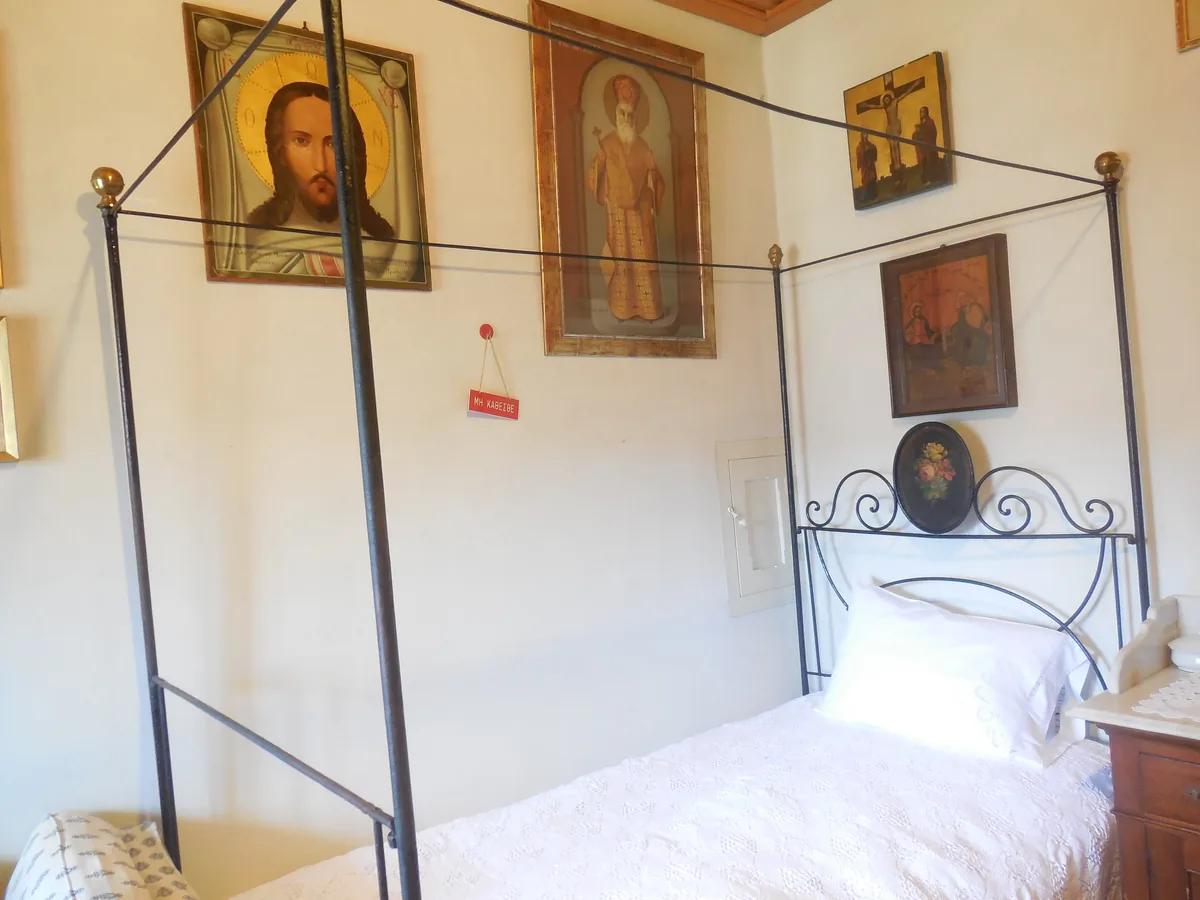

While still directing the school in Athens, Nectarios began restoring an abandoned monastic site near the village of Kontos on Aegina. In 1904 he founded a women's monastery there and dedicated it to the Holy Trinity. The work was completed in 1907. He resigned from the school in 1908 and moved to a small house outside the convent, where he lived until his death in 1920.
His house remains at the monastery with personal belongings inside. His grave is held in a small chapel nearby. Those surviving places make the pilgrimage concrete: visitors are not only entering a church named in his memory, but also the place where he lived, worked, prayed, and was buried.
The monastery and the modern church are not the same building
Several sacred buildings stand within the same complex, which is why the names are easily confused. The older convent is formally the Holy Trinity Monastery, although it is commonly called the Monastery of Saint Nectarios. Its main church is a basilica dedicated to the Holy Trinity. A smaller church and the chapel containing Nectarios's grave also stand there.
The large domed Church of Saint Nectarios is the modern church beside the monastery. It was built in his honor and is the building most visible on approach. Calling the whole place the Church of Saint Nectarios is understandable, but it hides the older Holy Trinity convent that Nectarios himself founded.
Why Orthodox Christians call him a saint
The Ecumenical Patriarchate formally proclaimed Nectarios a saint on April 20, 1961. His principal feast is November 9, the day after his death. The monastery also commemorates the translation of his relics on September 3.
Orthodox Christians often call him Nectarios the Wonderworker. The title expresses the Church's belief that healings and other help have been received through prayers for his intercession. This page reports that belief as the Church's, without weighing it. Pilgrims come to Aegina to pray, venerate his relics, and remember a bishop whose reputation for holiness outlived the church judgment made against him.
Sources
- Nektarios the Wonderworker, Bishop of Pentapolis — Greek Orthodox Archdiocese of America
- Άγιος Νεκτάριος Αιγίνης — Wikipedia (Greek; the 1961 proclamation)
- The canonical restoration of Saint Nectarios — Greek Orthodox Patriarchate of Alexandria and All Africa (Greek)
- Monastery of Agios Nektarios (Monastery of Agia Triada) — Religious Greece
- Bulletin for Sunday, November 9, 2025: St. Nektarios of Aegina — St. Mary's Antiochian Orthodox Church (feast-day epistle)
- Writings of Saint Nectarios of Aegina — Pravoslavie.ru (translated excerpts)
Further reading
- Saint Nectarius Kephalas, Metropolitan of Pentapolis — Orthodox Church in America (full life)
- St. Nectarios of Aegina (Modern Orthodox Saints, vol. 7) — Constantine Cavarnos, Institute for Byzantine and Modern Greek Studies, 1981 (borrowable on the Internet Archive)